Skip to content

Cart

Your cart is empty

Article: Transitions, Transitions, Transitions

Transitions, Transitions, Transitions

Transitions, Transitions, Transitions

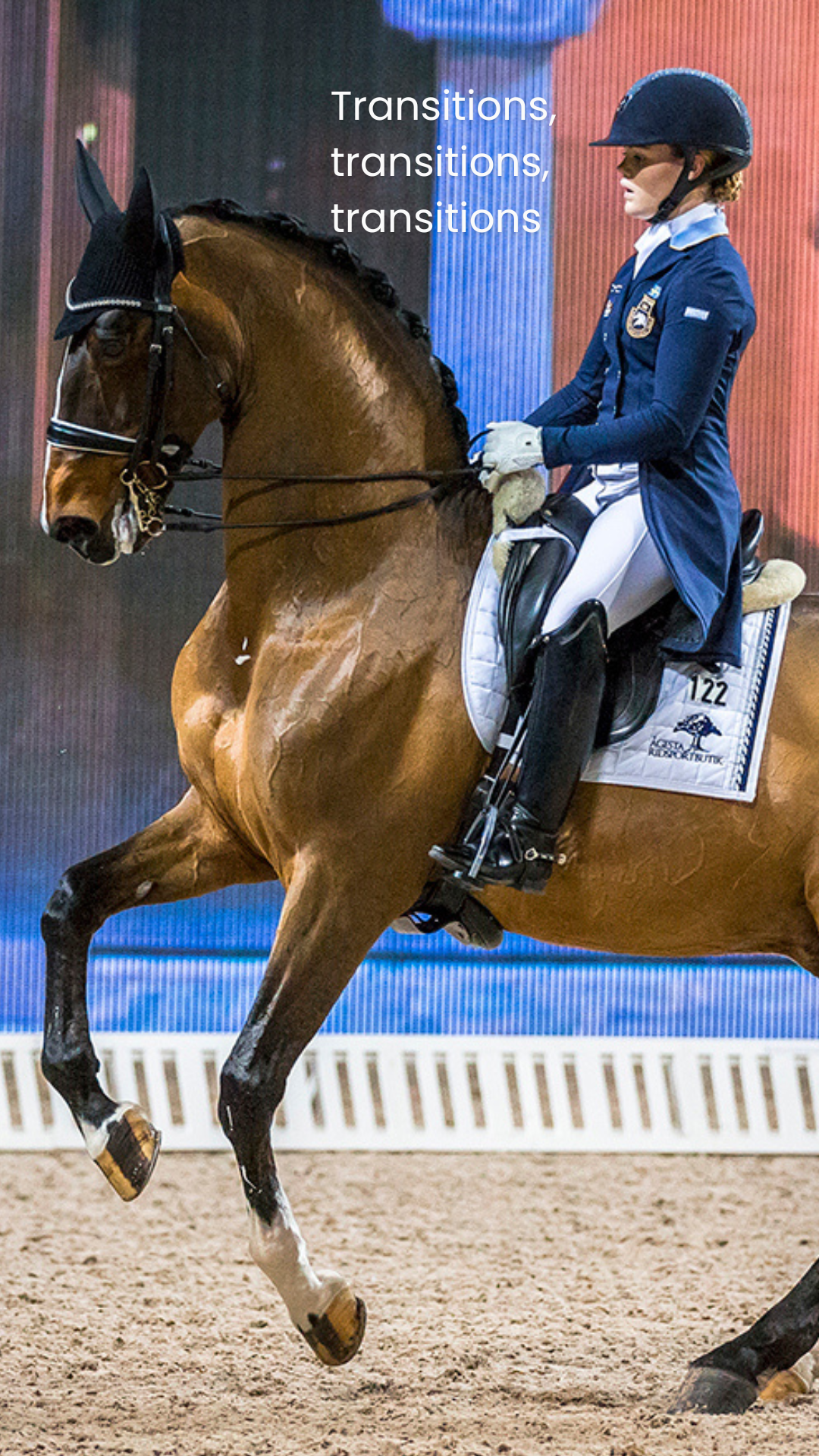
If there is one exercise that benefits almost every horse and rider, regardless of discipline, it is transitions. Simple on paper. Incredibly valuable in practice. Transitions improve balance, responsiveness and communication between horse and rider. They encourage the horse to pay attention to the aids, engage the hindquarters and carry more weight behind rather than on the forehand. And the beauty of transitions is that they can be adapted to every level of riding.

For newer or younger riders, transitions often mean moving between gaits:

Walk to trot. Trot to canter. Canter to trot. Trot to halt.

These transitions help develop responsiveness, balance and understanding of the aids. As horse and rider become more educated, transitions can also happen within the gait itself.

Working trot to medium trot. Medium trot back to working trot. Collected canter to a more forward canter. A few bigger strides, then back again.

Many trainers would argue that these transitions within the gait are just as important as transitions between gaits. They help build strength, balance, self-carriage and adjustability while teaching the horse to stay attentive to even the smallest aids. And perhaps most importantly, transitions reveal a lot. They quickly tell you whether your horse is truly in front of your leg, listening to your seat and connected to your hand.

The best riders in the world use transitions constantly. Not because they're exciting. But because they work. Whether you're riding dressage, jumping, eventing or simply enjoying a hack, transitions belong in almost every ride. Because better transitions often lead to better rhythm. Better balance. Better connection. And ultimately, better riding.

🤍 Mini challenge

During your next ride, add five extra transitions than you normally would. Try both transitions between gaits and transitions within the gait. Then notice what happens to your horse's balance, focus and responsiveness.
TIP OF THE WEEK - HOW TO BECOME A BETTER RIDER

Transitions, Transitions, Transitions

Transitions, Transitions, Transitions

If there is one exercise that benefits almost every horse and rider, regardless of discipline, it is transitions. Simple on paper. Incredibly valuable in practice. Transitions improve balance, res...

Read more
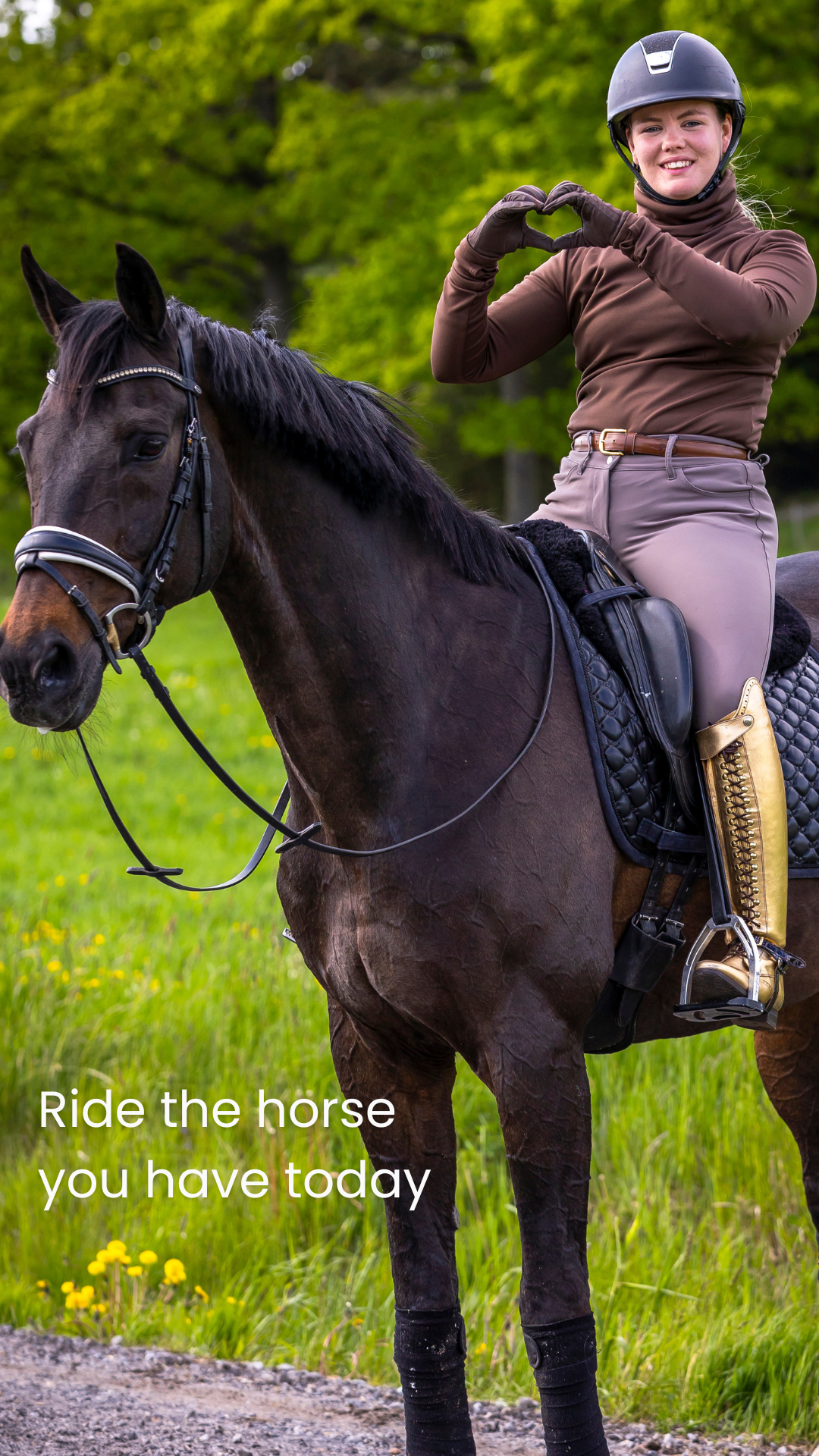
Ride the horse you have today

Ride the horse you have today

One of the most important lessons in horse riding is learning to ride the horse you have today, not the one you had yesterday. As riders, it’s easy to carry expectations into every ride. Maybe you...

Read more
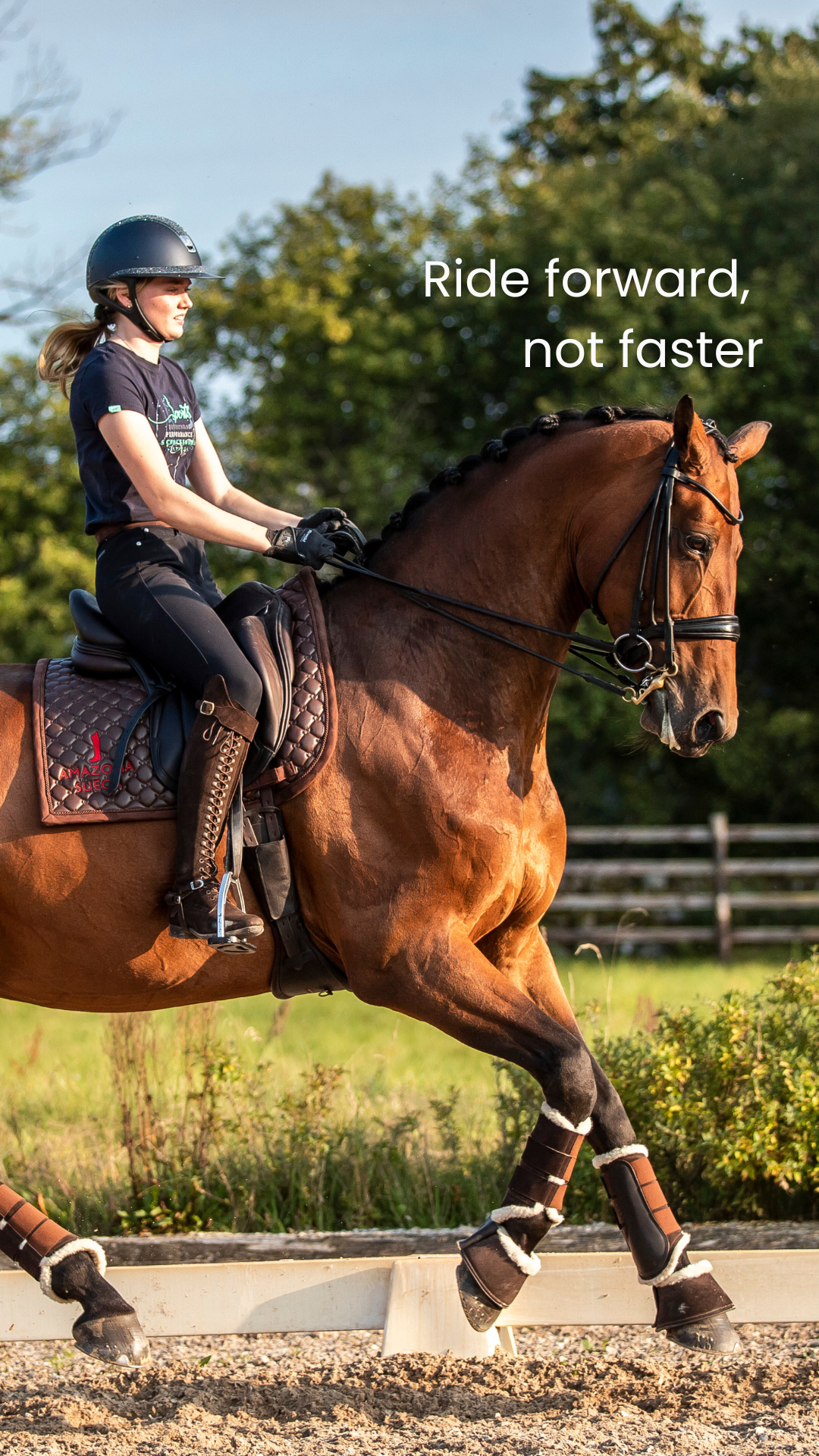
Ride forward, not faster

Ride forward, not faster

Many riders try to solve things by riding faster. More leg. More speed. More energy. But forward riding and rushing are not the same thing. A horse can move quickly without balance. And a horse ca...

Read more
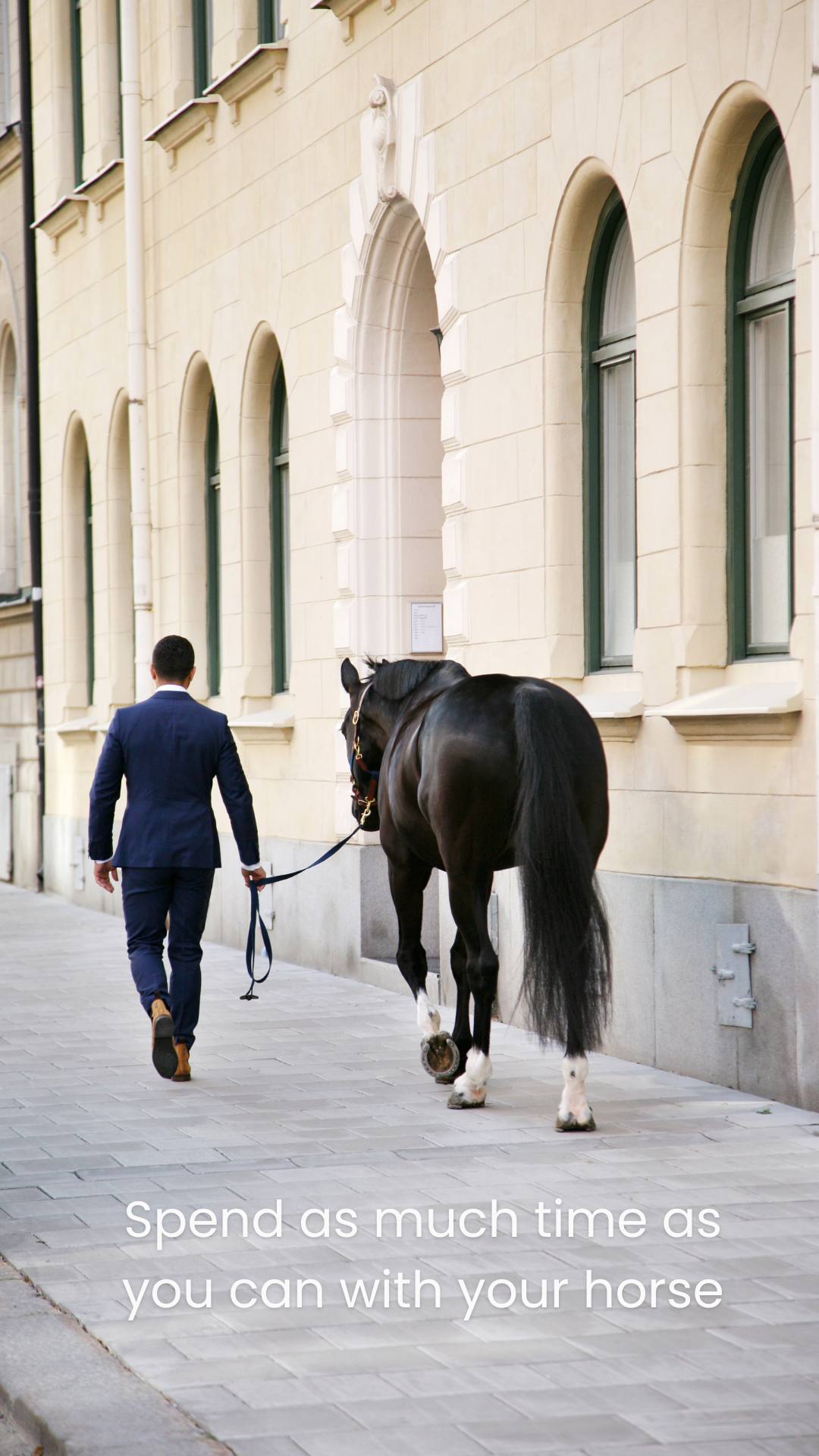
Spend as much time as you can with your horse

Spend as much time as you can with your horse

Becoming a better rider isn't only about the hours spent riding. Some of the most important moments happen before and after you sit in the saddle. When you spend time with your horse outside traini...

Read more
Watch like a rider - not a spectator

Watch like a rider - not a spectator

Watching great riders is something most of us do. We scroll, we watch competitions, we follow our favourites - and often think: that looks so easy. But there’s a big difference between watching and...

Read more
Look up – your body follows your eyes

Look up – your body follows your eyes

It sounds simple - but it makes a bigger difference than you might think. Where you look affects everything. When your eyes drop, even just slightly, your body follows.Your shoulders tip forward, ...

Read more
Breathe – it changes everything

Breathe – it changes everything

Riding isn’t just about what you do – it’s about how you feel while doing it.And one of the first things that changes when you feel pressure, nerves, or frustration is your breathing. It becomes s...

Read more
Fuel your body

Fuel your body

Fuel your body - it shows in your riding. Riding asks more of you than you sometimes realize.Not just skill and technique, but focus, balance, strength - and presence. And all of that starts with ...

Read more